
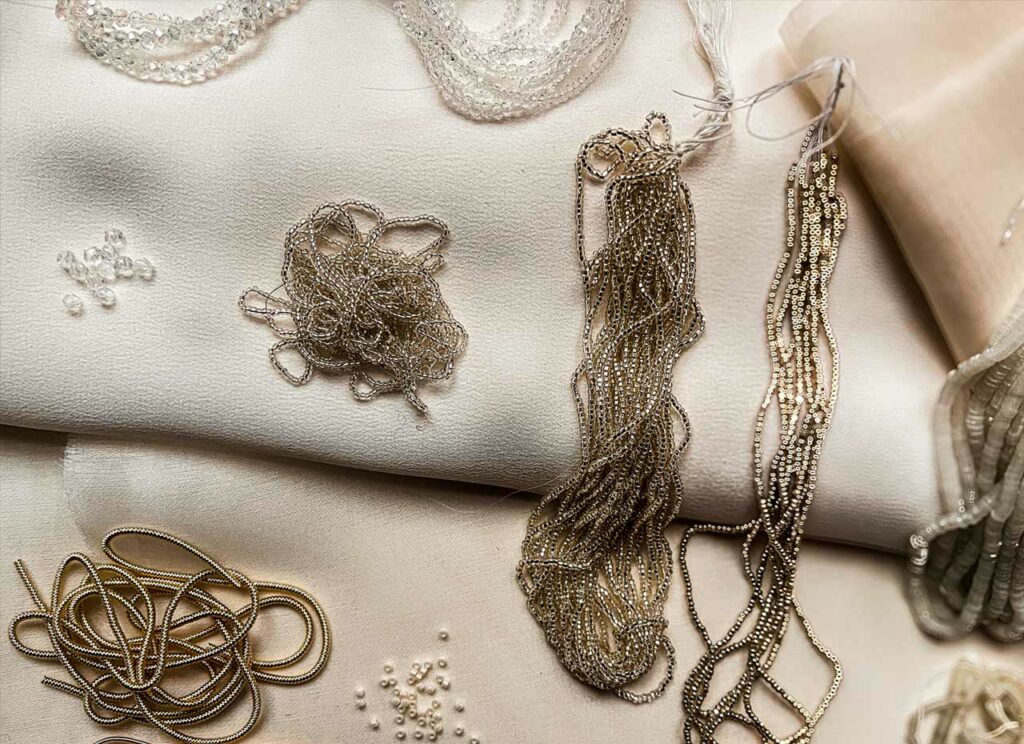
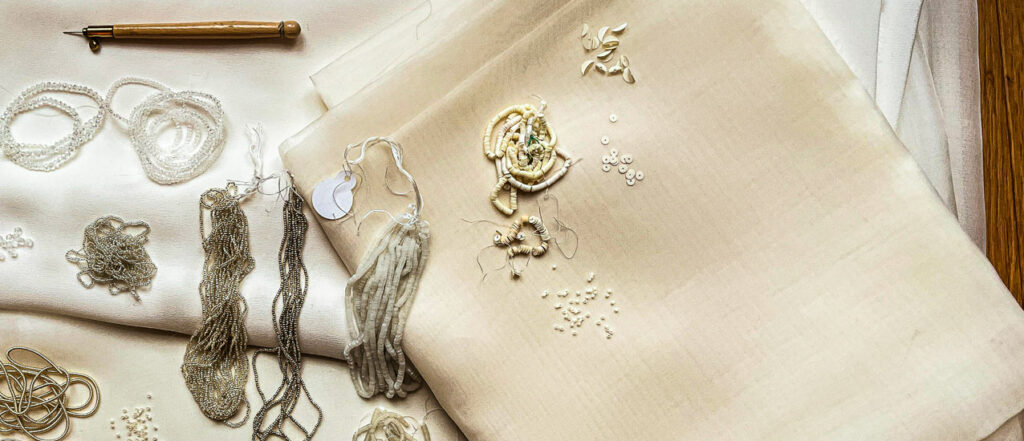
Before the dress exists, there is a table. A surface covered in pale tones. Small containers. Folded lengths. Coiled threads. Nothing is assembled yet. Everything is already speaking. In the studio of (NØ), preparations for a singular dress unfold in silence — the kind that belongs to ateliers, where materials are not chosen quickly, but listened to. White does not arrive alone. It brings its variations. Cream, ivory, champagne.
Light white gold, silver — barely luminous, never insistent. Each shade carries a different temperature, a different memory of light. Together, they compose a family rather than a contrast. No opposition. No hierarchy. Only nuance. This is the palette chosen for a wedding dress meant to linger — not to perform.
Fabrics — the quiet architecture
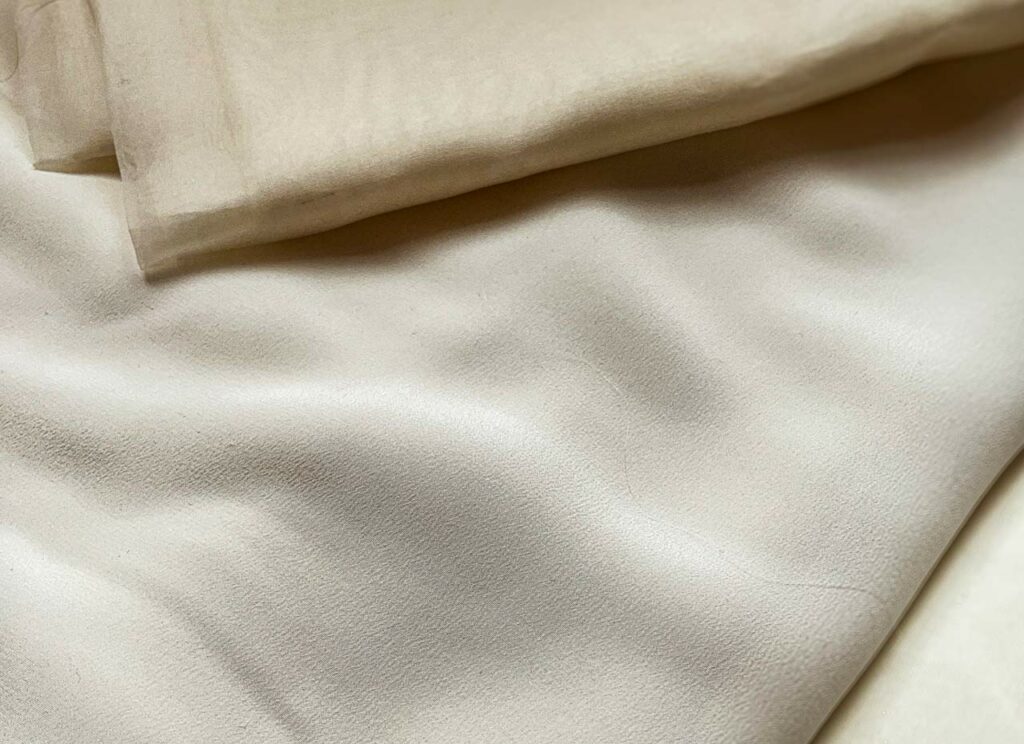
Fabrics are laid out like grounds for future gestures.
Silks that accept embroidery without resistance. Satins that reflect softly, never sharply.
Organza that hold air as much as thread. These materials are not decorative by nature. They are receptive. They allow what will come later — stitches, beads, motifs — to exist without strain. In haute couture embroidery, the fabric is not a background. It is a collaborator.
Threads — lines of intention
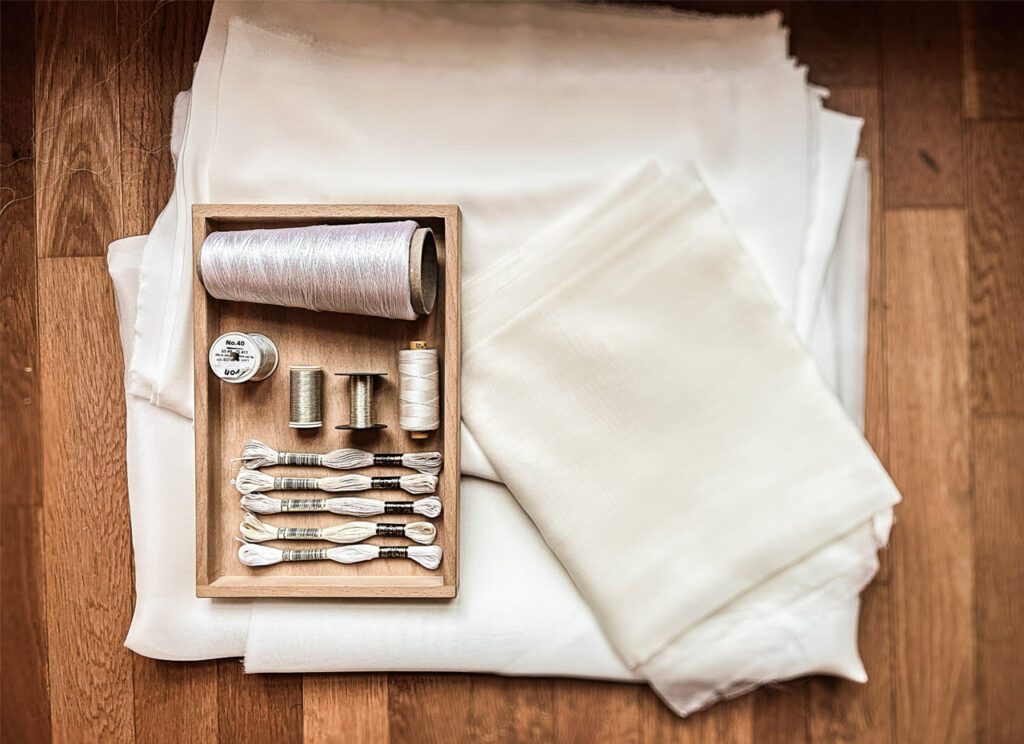
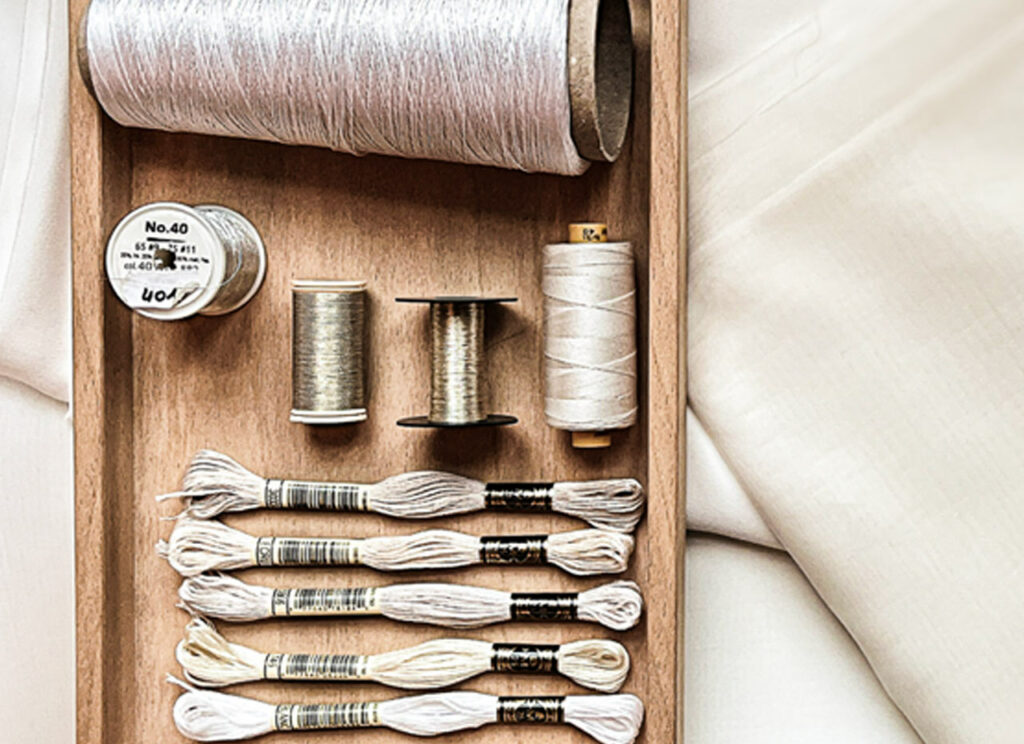
Threads wait wound, aligned, patient.
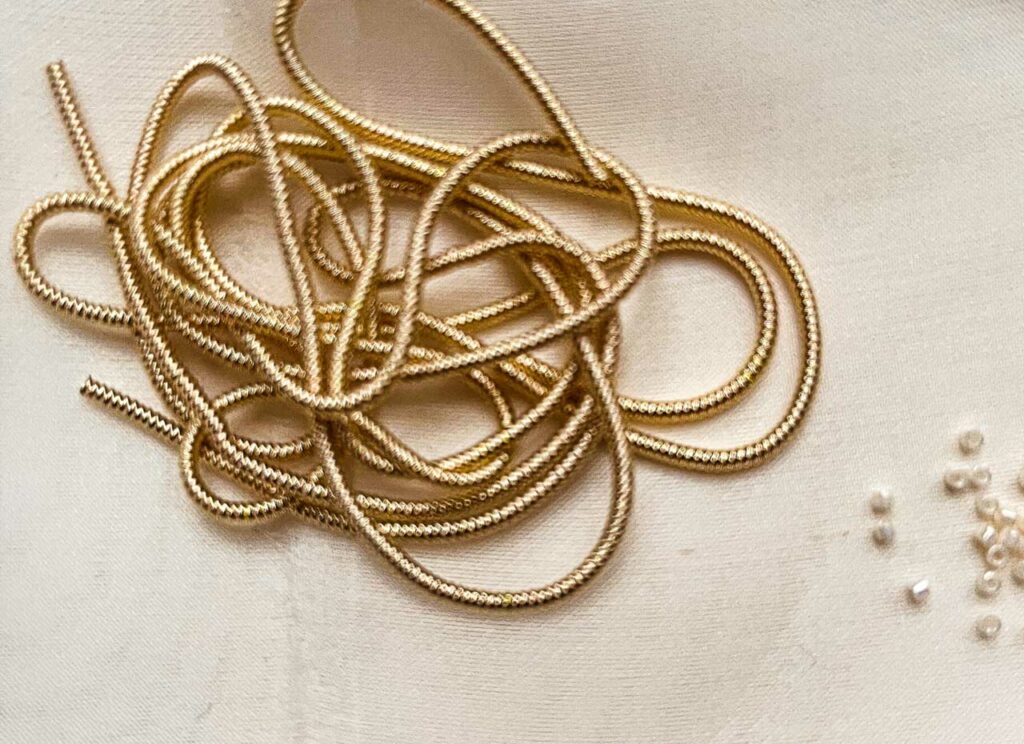
Silk threads in softened whites glide easily through cloth. Cotton threads bring structure, anchoring delicate work. Metallic threads — silver, pale gold — remain restrained, chosen for their ability to appear only when movement calls them. Each thread is selected not for visibility, but for behavior: how it bends, how it holds tension, how it disappears once its task is done.
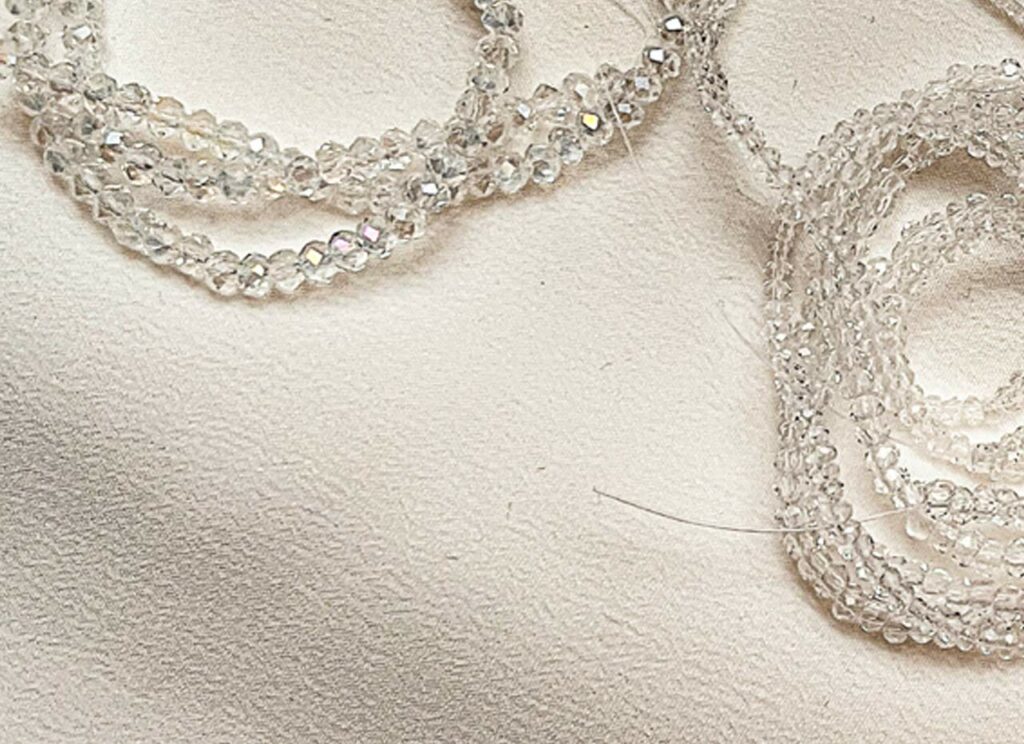
Beads — contained lightBeads gather in small groups, sorted not only by size, but by mood.
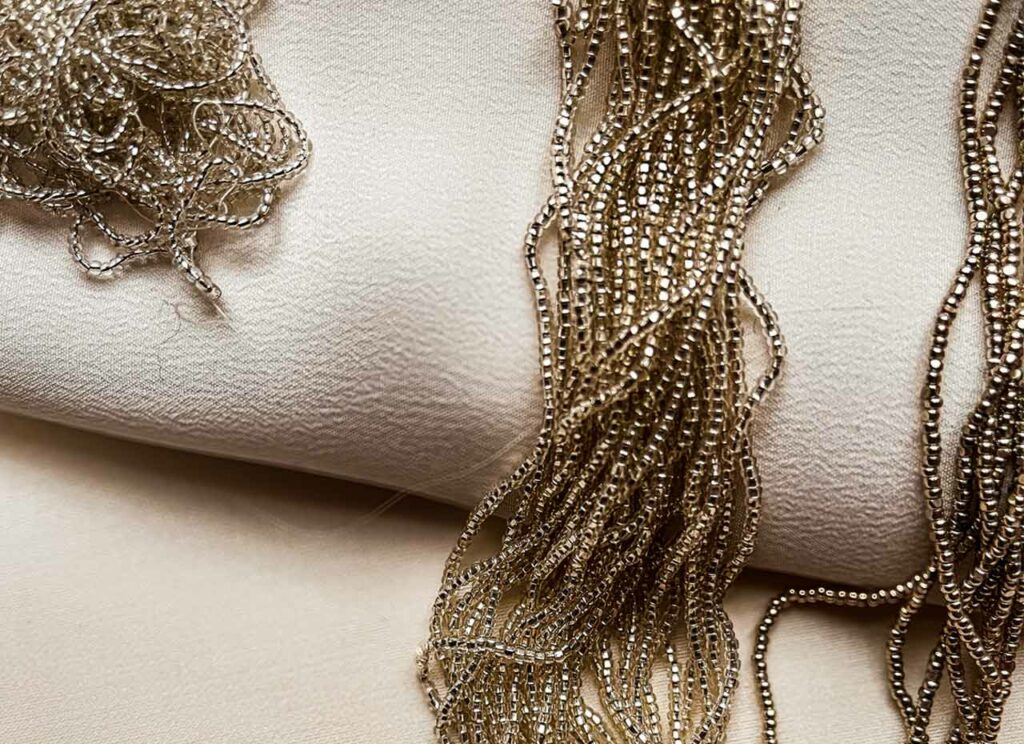
Beads gather in small groups, sorted not only by size, but by mood.
Pearls in white and cream carry a muted glow. Seed beads in ivory offer density without weight. Champagne crystals refract warmth rather than sparkle. Silver and light gold elements punctuate, never overwhelm. In couture embroidery, beads are not scattered. They are placed. Each one holds a position — like punctuation in a sentence.
Threaded sequins & beads — the language of handwork
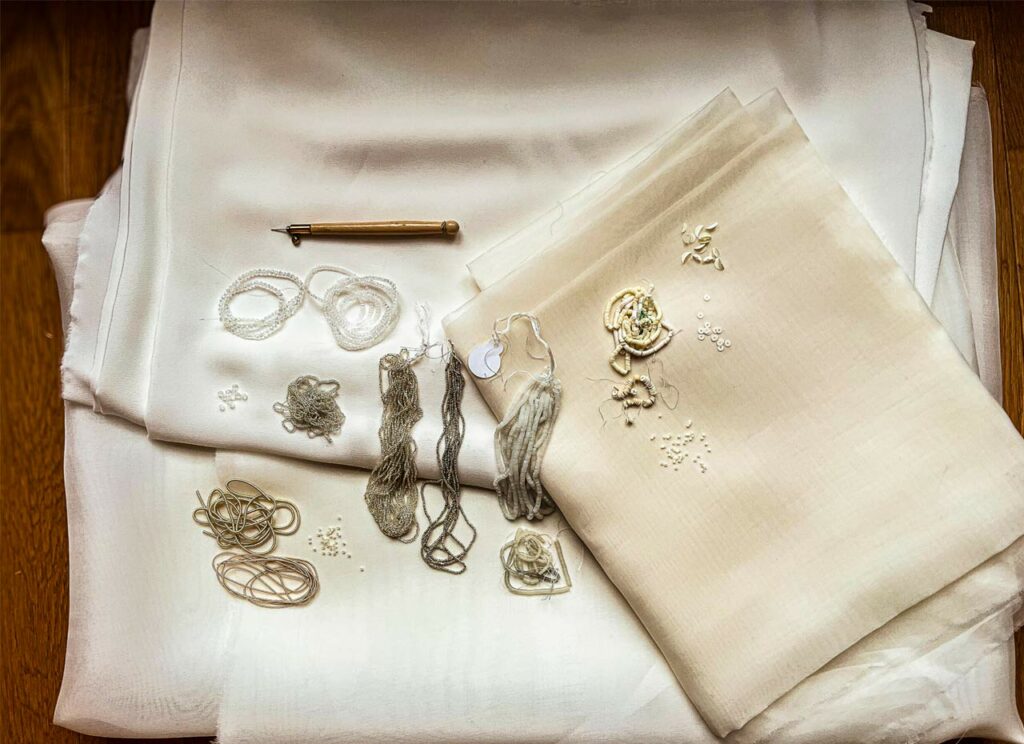
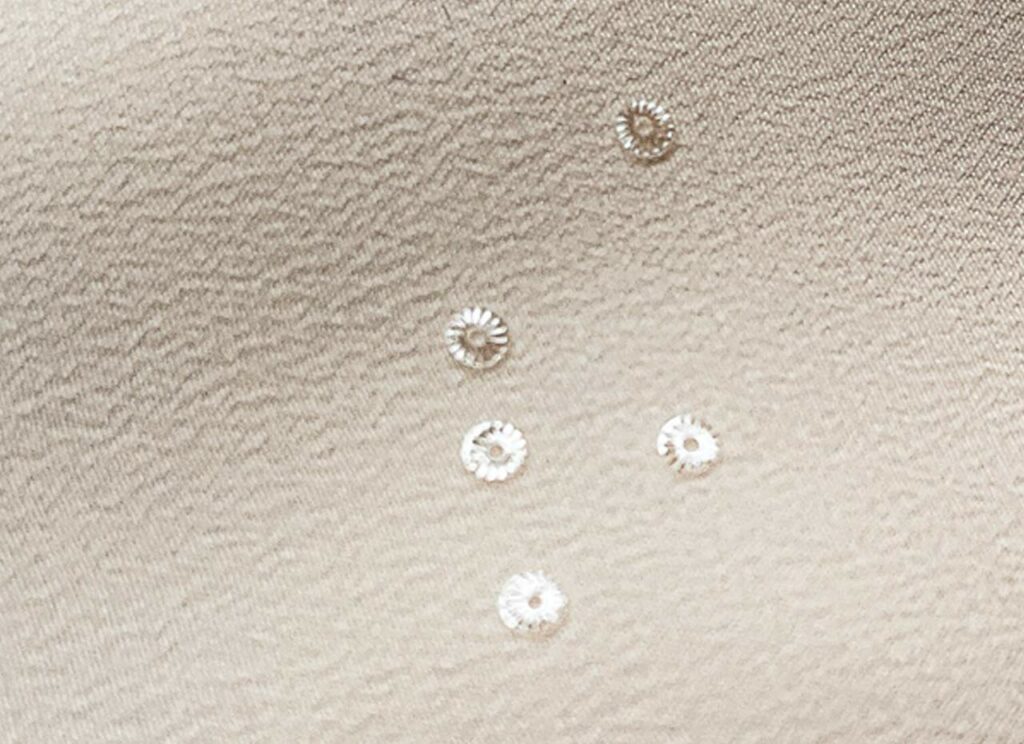
Threaded sequins and beads rest already aligned, already fluent.
White sequins overlap gently, suggesting petals, scales, or light caught on fabric. Ivory and champagne strands bend easily, ready to follow a curve, a motif, a movement of the hand. Silver appears briefly — a breath, not a statement.
These elements belong to slow work. To repetition. To attention. They respond to patience more than speed, to presence more than planning.
A lineage, quietly acknowledged
Such supplies belong to a long tradition.
To the ateliers of haute couture embroidery. To ceremonial garments stitched for moments of passage. To opera costumes where surface tells story before a single note is sung.
Here, the wedding dress is approached not as a trend, but as a narrative surface — a field where material, gesture, and memory meet. An object meant to hold a moment, then continue to exist beyond it.
Waiting
Nothing is stitched yet.
The beads remain gathered. The threads remain coiled. The fabrics remain open, receptive. They wait — not passively, but attentively — for the slow construction of a dress shaped by detail rather than excess, by intention rather than spectacle.
A singular dress does not begin with form. It begins with materials chosen to listen.
A quiet continuation
New studies, atelier notes, and narrative surfaces quietly unfold through the journal and the studio’s letters, following their own rhythm.
Nothing to rush.
Only to notice.
This journal belongs to quiet things. To surfaces shaped slowly. To gestures that leave a trace without insisting. Here, creation unfolds in fragments. A surface at a time. A detail held long enough to matter.
For those who value restraint, handwork, and the poetry of materials, this journal offers a place to pause — and to follow the work as it reveals itself, gently, over time.