
Some days, the studio doesn’t begin with drawing—but with the slow gathering of what’s always been there. The objects closest to the hand, the ones chosen without thought, lined along the table in quiet witness. Not everything is new. Not everything needs to be. But each tool holds its own kind of invitation—silent, familiar, waiting. Here is a closer look at what stays nearby when the work begins.
All-Time Favorite Drawing Tools
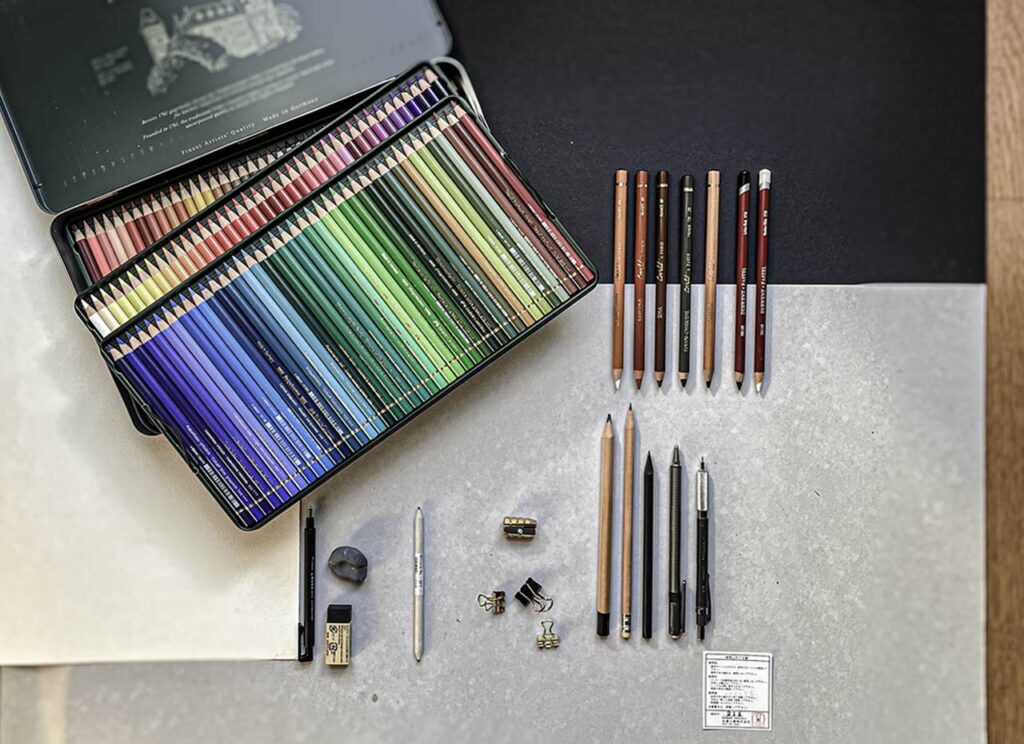
Some tools return to the hand before thought arrives. These are the ones softened by years, smoothed by use—the kind that no longer need choosing. A particular color, a certain old pencil, the small tin of leads that always finds its way to the table. They speak not of novelty, but of deep familiarity. To hold them is to begin again, without question.
Best Pencils and Mechanical Pencils for Drawing
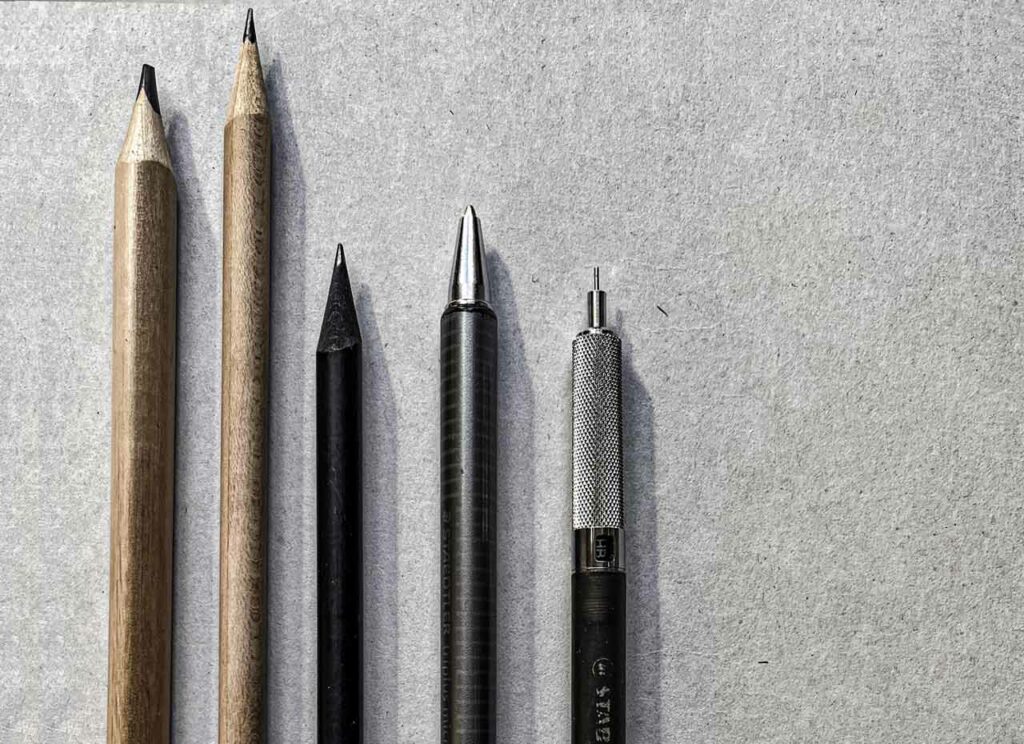
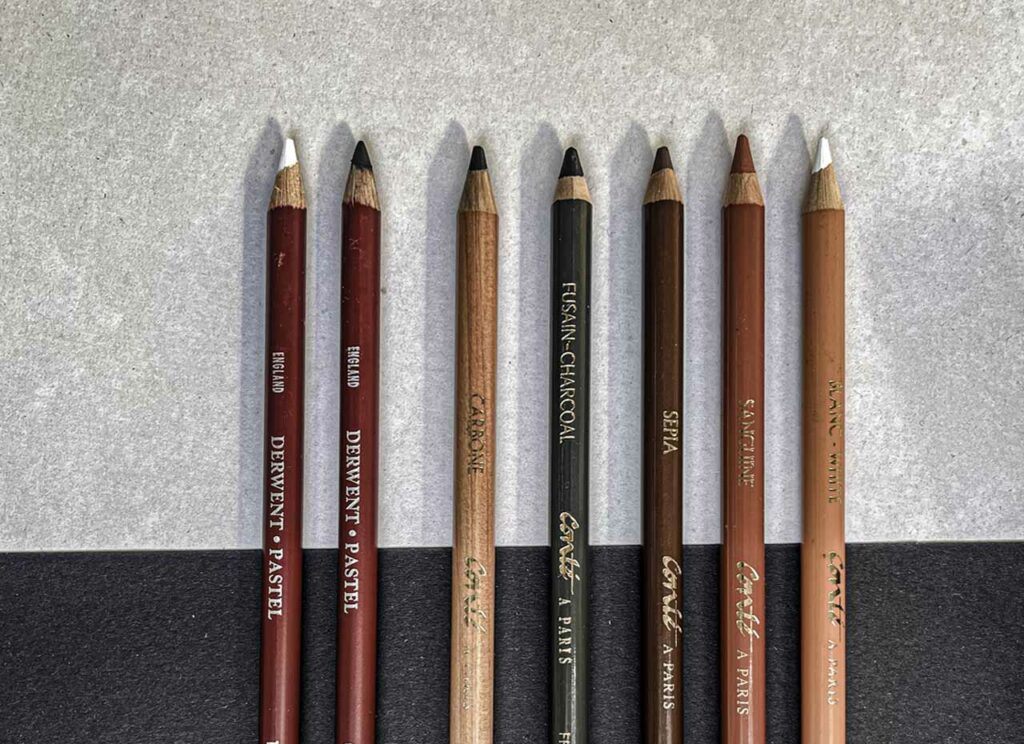
Graphite offers its voice in many forms. In (NØ)’s studio, soft wooden pencils sit beside the clean geometry of mechanical ones. One wears down with every gesture, the other clicks forward in measured intention. Each speaks to a different mood: one intuitive and weathered, the other precise and quietly technical. Both are called upon without hierarchy—just instinct.
Types of Erasers Artists Actually Use

Erasure here is not correction, but refinement. A kneaded eraser, shaped and reshaped like a thought. A gum eraser, soft as dusk, crumbling gently across the page. A hard white edge that clears with clinical precision. Each eraser holds the story of what was removed—and what remains underneath. These are not afterthoughts, but active tools in the drawing’s unfolding.
Unexpected and Quirky Drawing Tools
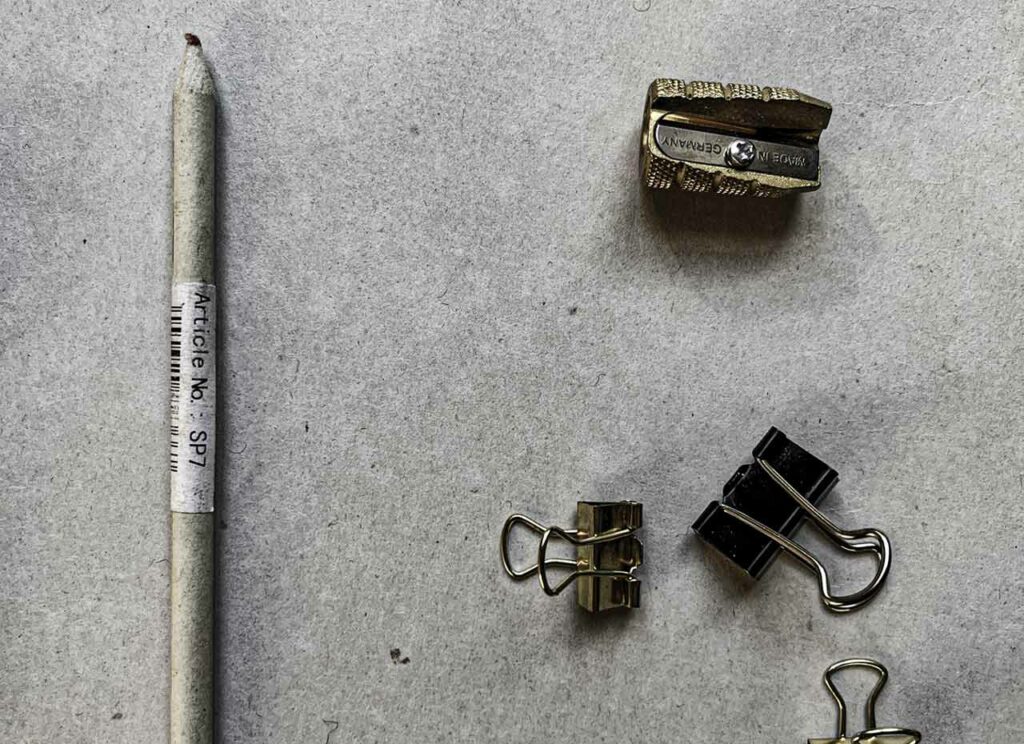
Not everything has a clear purpose. A brass sharpener, some clips used less for holding and more for their strange shapes. Small studio oddities—gifts, accidents, once-useful things—become part of the landscape. They’re the objects that don’t always explain themselves, but somehow stay. Their presence reminds us that the creative process is rarely linear.
Different Types of Sketchbooks for Artists
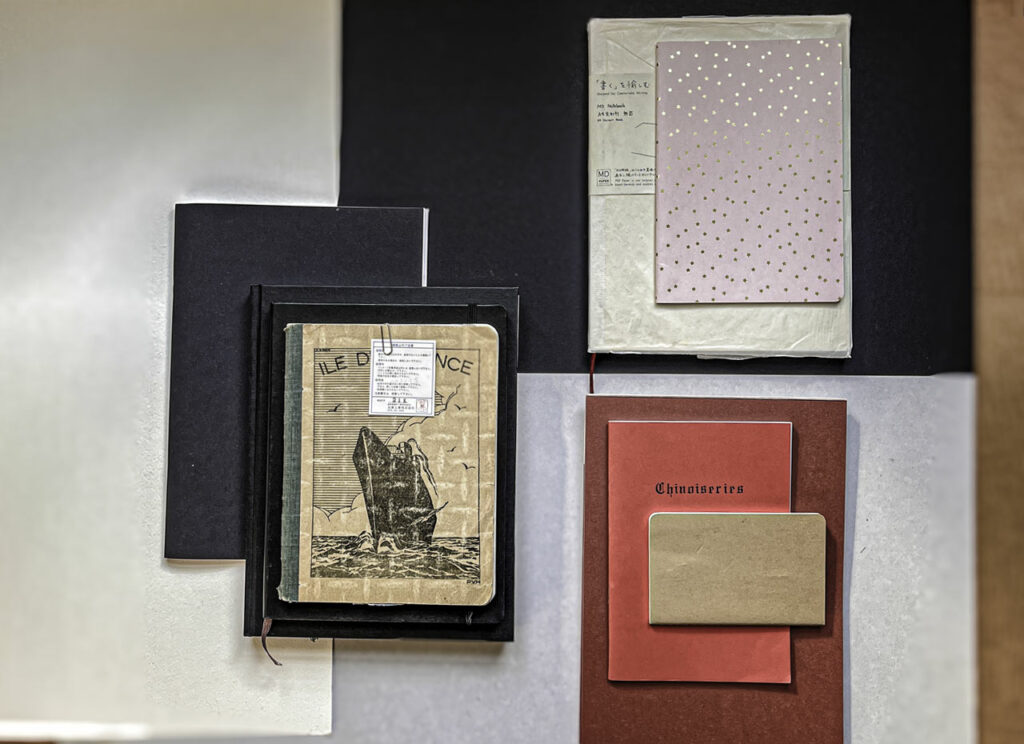
The choice of paper shifts the gesture. In (NØ)’s collection, there are sketchbooks with whisper-thin pages that buckle slightly at the touch of water, others thick and toothy, calling for charcoal or soft pencil. Some are small enough to hold in a coat pocket; others open wide enough to catch a whole afternoon’s worth of lines. Each offers a different kind of space—an invitation to enter, respond, and dwell.
Which tool calls to you today? Pick it up—not to finish something, but to begin. More glimpses from the studio coming soon—subscribe to stay close to the quiet practice of noticing.