
The morning begins slowly. A small cup of coffee cools beside an open book. (NØ)’s fingers move gently across the page — not hurriedly, but as if they were listening. Lately, (NØ) has been drawn into old botanical atlases. Books that seem to carry, between their pages, the hush of a field, the quiet beauty of a summer morning, the soothing calm of a late-day walk.
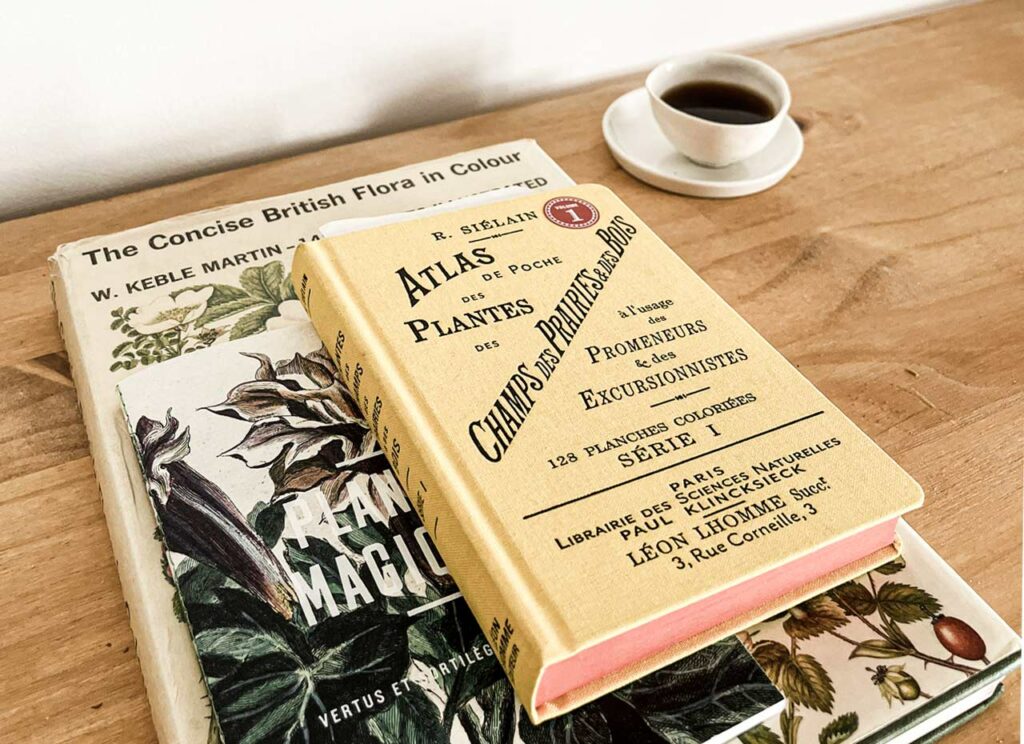
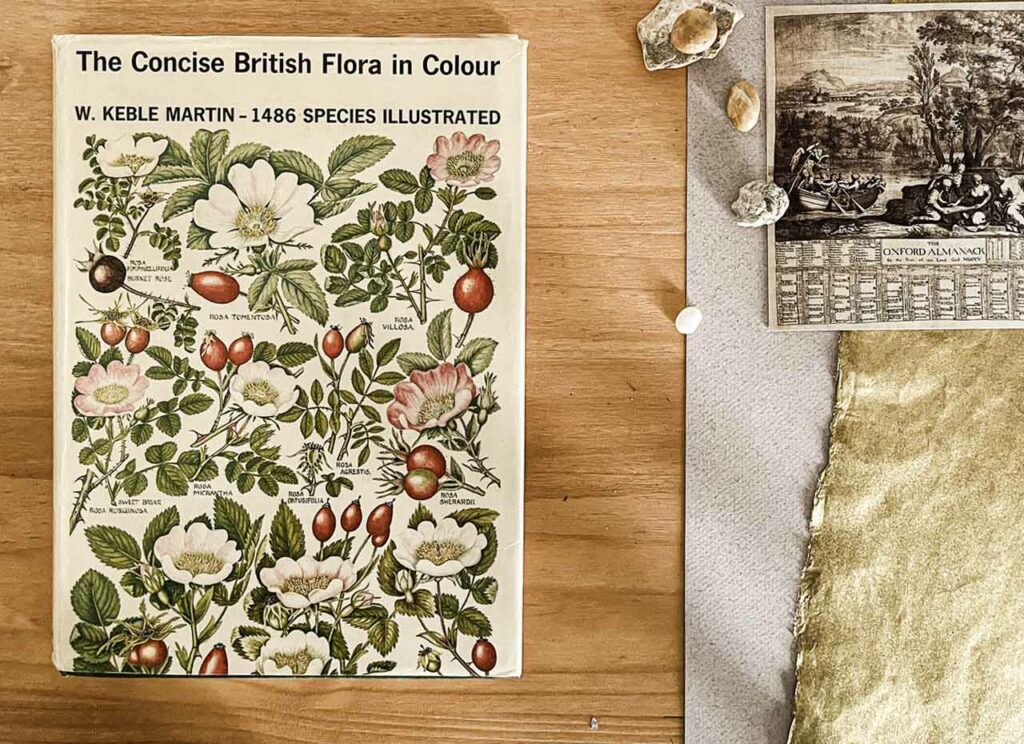
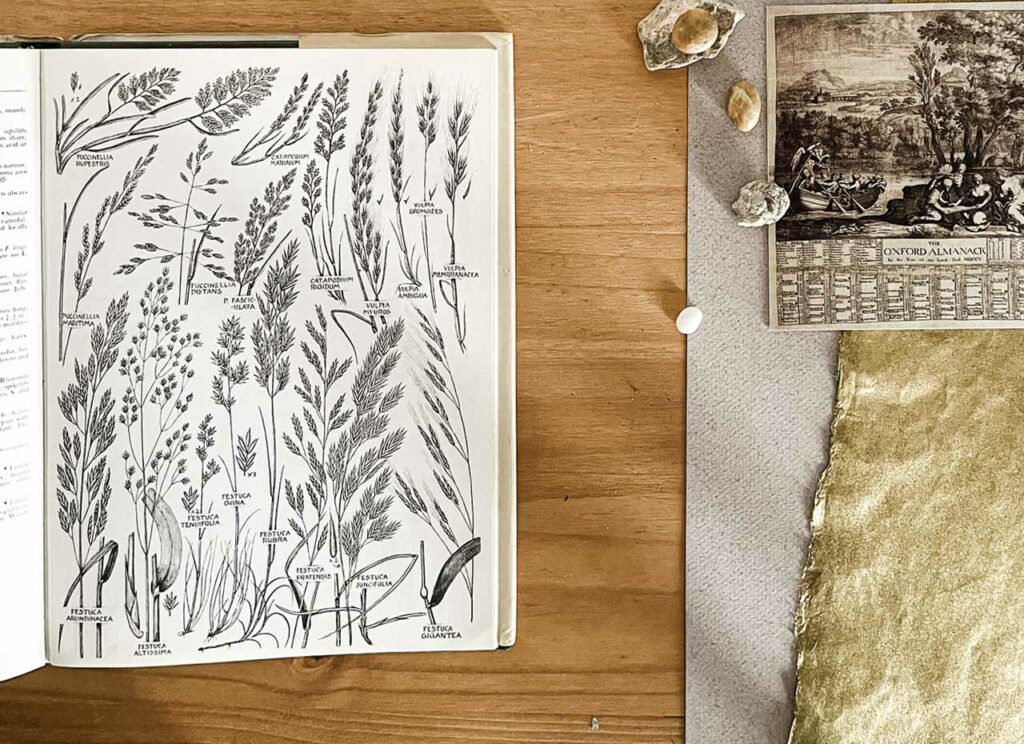
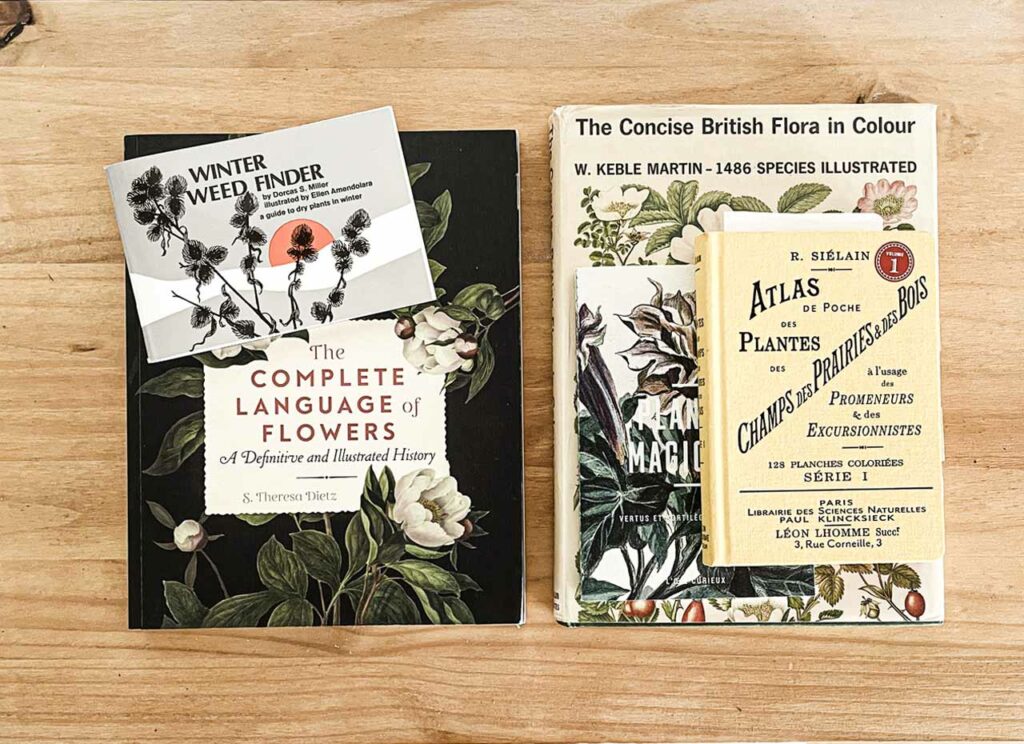
One of them — The Concise British Flora in Colour — feels almost too beautiful to disturb. Each page is filled with hand-drawn plants, painted with astonishing patience. You can sense the years behind the ink. Its author, W. Keble Martin, spent decades drawing from life — thousands of species observed, rendered, and named. But beyond the scientific gaze, it is the tenderness that lingers. The intimacy of looking.
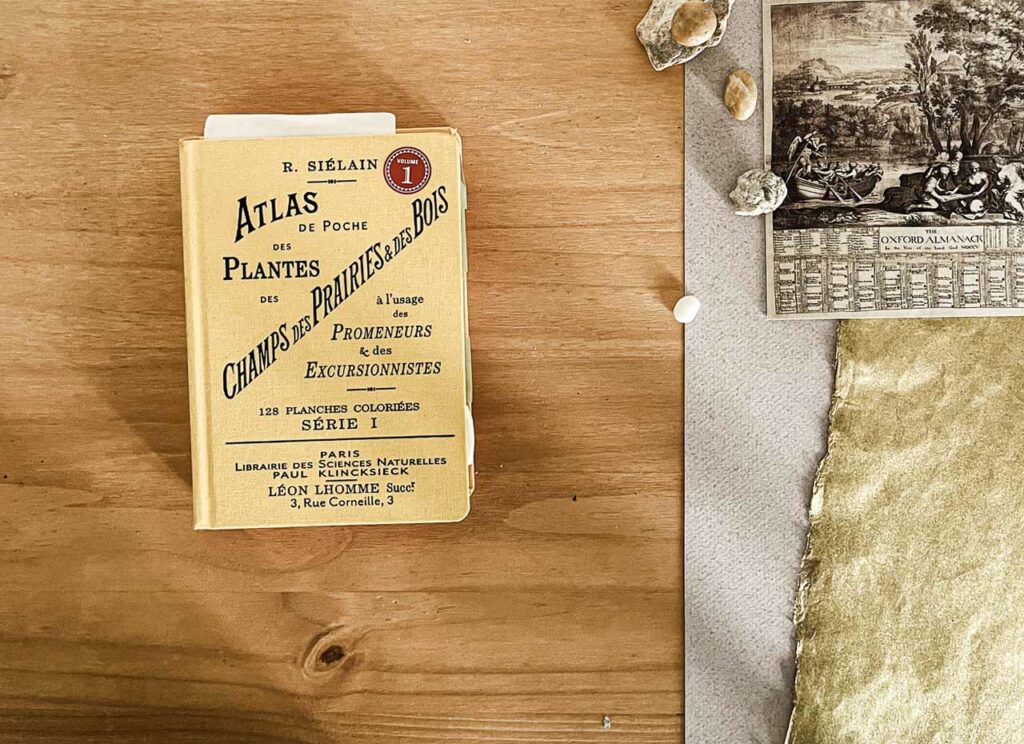
Another, smaller book — The Small Atlas of Field Flowers — follows (NØ) along the path of inspiration. More modest, but just as delicate. A collection of fine, fragile illustrations. Some nearly faded, others still vivid. Together, they whisper a quiet kind of poetry, like pressed petals hidden between the pages.
A small booklet recently slipped into this constellation of readings: Plantes magiques. Its discreet format gives it the air of a forgotten notebook. Inside, herbs, roots, and flowers with ancient powers — medicinal, symbolic, sometimes mysterious. Not a manual, but an invitation to imagine what the plants once knew before we named them. Some pages read like botanical incantations: simple lines, heavy with memory. This tiny volume opens the door to another way of seeing the vegetal world — intuitive, almost whispered.
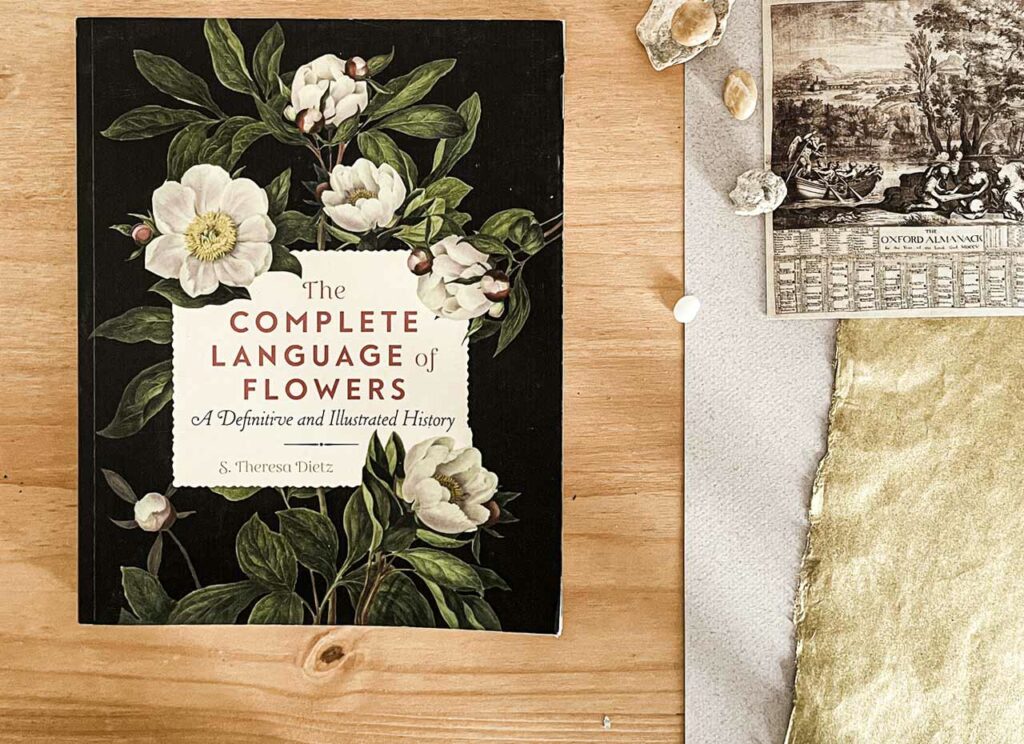
There is also The Complete Language of Flowers, a dense and ornate book, where each plant, each bloom, is given a meaning. Floral language becomes a secret code — silent love, forgiveness, longing, promise. A reminder of a time when offering a flower was like writing a sentence without words. This book reads like an intimate dictionary. Sometimes, a single word tied to a flower is enough to inspire a mood, a motif, a whole world.
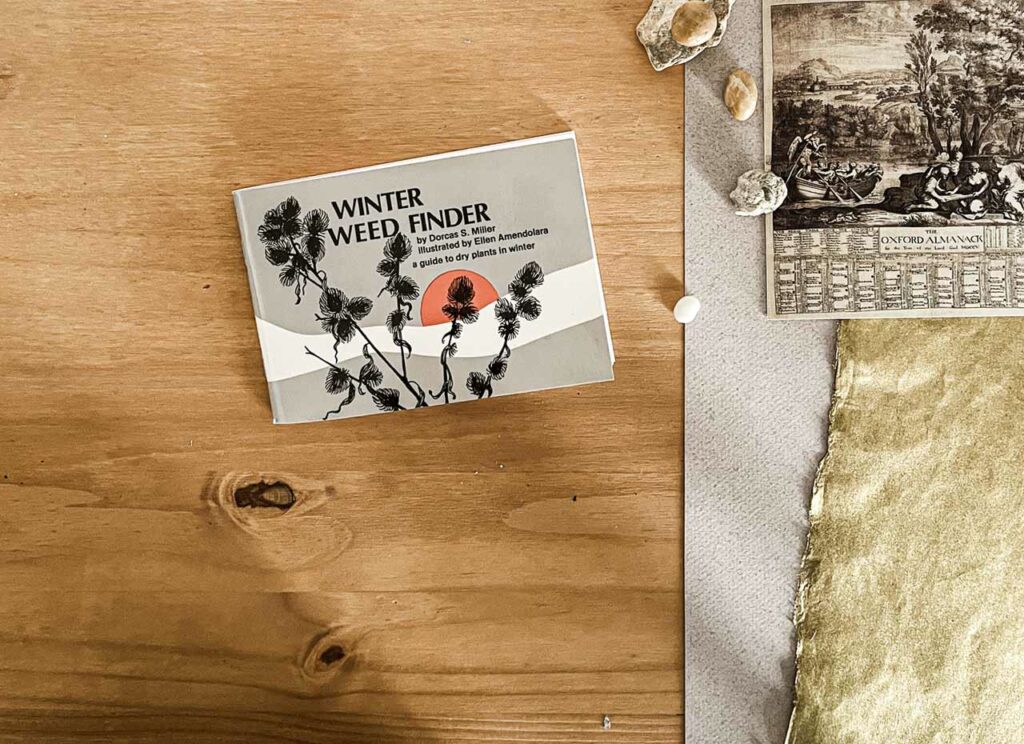
And finally, sitting quietly on the desk: Winter Weed Finder — for treasure-seekers like (NØ). Found in the bookstore of the MoMA, it holds within its pages not only a fascinating little world of winter seeds, but also the memory of a beautiful trip to New York, hand in hand. A tiny guide for identifying plants that persist through winter — dry, hidden, but still there. It speaks of what remains when everything seems to have disappeared. Hollow stems, seeds still clinging, the veins of a forgotten leaf. It teaches a new way of looking — finding form in disappearance, structure in vegetal silence. A book of patience, of observation, of slowness.
Perfect quiet morning…
These books are not merely references. They are rituals. Turning a page becomes a gesture of reverence — each leaf, stem, and petal holding its shape not only in ink, but in memory. These forms follow me. They return in my sketchbook. In loose lines. In layered shapes. They reappear in soft washes of colour, and in the idea taking form: a new collection of surface patterns.
This series is not a literal translation. It is not a herbarium. It is something closer to an echo. A quiet rhythm born from holding these books, reading them, letting them live in the gaze. From the feel of the paper. From the way pigment settles, slowly. There is a deep quiet in all of this — as though drawing from a landscape walked only once,
yet remembered by all the senses.
And you ? What landscape are you travelling through right now ?